.png)
How the
T3-Method
The Team Tale
Works
The T3-Method, The Team Tale is a structured immersive strategic system designed to help organizations address complex internal challenges through behavioral simulation and operational planning.
It is not traditional team building.
It is not gamification.
It is not entertainment.
The T3-Method is a decision laboratory for organizations facing strategic, cultural, or leadership complexity.

wake up from reality
What Is the T3-Method?
The T3-Method is a proprietary organizational development framework created by Andrea Furlan.
It combines:
-
Structured strategic analysis
-
Immersive scenario design
-
High-pressure behavioral simulation
-
Facilitated strategic debriefing
-
Operational action planning
Its purpose is to reveal authentic team dynamics and transform insight into concrete decisions.
The T3-Method Process
The method follows five structured phases:

1. T3 Focus – Strategic Diagnostic Phase
Every intervention begins with a real organizational issue.
Typical triggers include:
-
Leadership misalignment
-
Conflict between partners or departments
-
Decision-making paralysis
-
Organizational restructuring
-
Cultural stagnation
-
Strategic uncertainty
The T3 Focus phase clarifies:
-
The real strategic bottleneck
-
Root causes versus surface symptoms
-
Risks associated with inaction
-
The operational objective (T3 Objective)
Deliverable:
A clearly defined strategic node that will guide the immersive intervention.
This ensures the process is problem-driven, not activity-driven.
2. Immersive Scenario Design
The identified organizational challenge is translated into a structurally equivalent immersive scenario.
The scenario is custom-built and intentionally designed to create:
-
Time pressure
-
Resource constraints
-
Strategic trade-offs
-
Ethical dilemmas
-
Negotiation dynamics
The immersive structure mirrors real-world tensions while providing a safe decision-making environment.
The objective is to generate authentic behavioral data under pressure.
3. Live Immersive Strategic Session
Format:
-
In-person intervention
-
1 intensive day (executive teams)
-
1–2 days (extended leadership groups)
During the session, participants must:
-
Make strategic decisions in real time
-
Manage crises and uncertainty
-
Negotiate alliances
-
Allocate limited resources
-
Resolve conflicts
The facilitator observes and documents:
-
Decision-making patterns
-
Informal leadership emergence
-
Power dynamics
-
Risk tolerance
-
Conflict management behaviors
-
Alignment between declared values and actual actions
This phase generates behavioral insights that traditional meetings, surveys, or workshops rarely capture.
4. Structured Strategic Debrief
The immersive session is systematically analyzed and translated back into the real organizational context.
This phase identifies:
-
Cognitive biases
-
Hidden tensions
-
Structural misalignments
-
Leadership gaps
-
Communication breakdowns
The objective is strategic clarity, not experiential reflection.
The immersive environment functions as a diagnostic mirror.
5. T3 Objective – Operational Action Framework
The T3-Method concludes with a structured operational outcome.
Deliverables typically include:
-
Clear strategic decisions
-
Defined responsibilities
-
Prioritized actions
-
Conflict resolution pathways
-
Implementation timelines
The T3-Method does not provide generic insights.
It supports organizations in building a concrete operational plan aligned with real behavioral evidence.

Implementation Structure
-
Preparation phase: 2–4 weeks
-
Immersive intervention: 1–2 days
-
Strategic restitution: within 7–10 days
The T3-Method is suitable for:
-
Executive boards
-
Leadership teams
-
Organizations in transition
-
Companies facing strategic or cultural complexity
When the T3-Method Is Appropriate
The method is particularly relevant when organizations experience:
-
Persistent unresolved conflict
-
Slow or ineffective strategic decisions
-
Resistance to change
-
Misalignment between leadership and execution
-
Lack of accountability clarity
Expected Impact Areas
While outcomes depend on context, organizations frequently report improvements in:
-
Strategic alignment
-
Decision speed
-
Role clarity
-
Internal trust
-
Leadership consistency
-
Reduced friction between departments
Why the T3-Method Is Effective
In conventional corporate settings, individuals operate within formal roles and protective communication patterns.
In a structured immersive environment under strategic pressure, authentic behaviors emerge.
The T3-Method analyzes observable behavior rather than declared intention.
It creates a controlled environment where strategic and relational dynamics become visible, measurable, and actionable.
Why the T3-Method Is Effective
In conventional corporate settings, individuals operate within formal roles and protective communication patterns.
In a structured immersive environment under strategic pressure, authentic behaviors emerge.
The T3-Method analyzes observable behavior rather than declared intention.
It creates a controlled environment where strategic and relational dynamics become visible, measurable, and actionable.
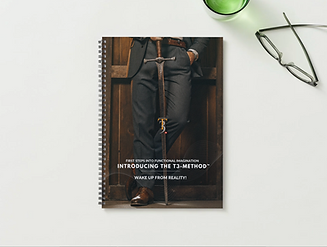
Take the Next Step: Elevate Engagement with T3-Method
Generic surveys and workshops are not enough. T3-Method immerses your team in real scenarios to uncover the root causes of engagement issues, providing actionable insights for lasting results.
Download the T3 Booklet (28 pages) for free to discover how the method combines analysis and gamification to transform teams.